


Table of Contents
Introduction to Lord Vishnu
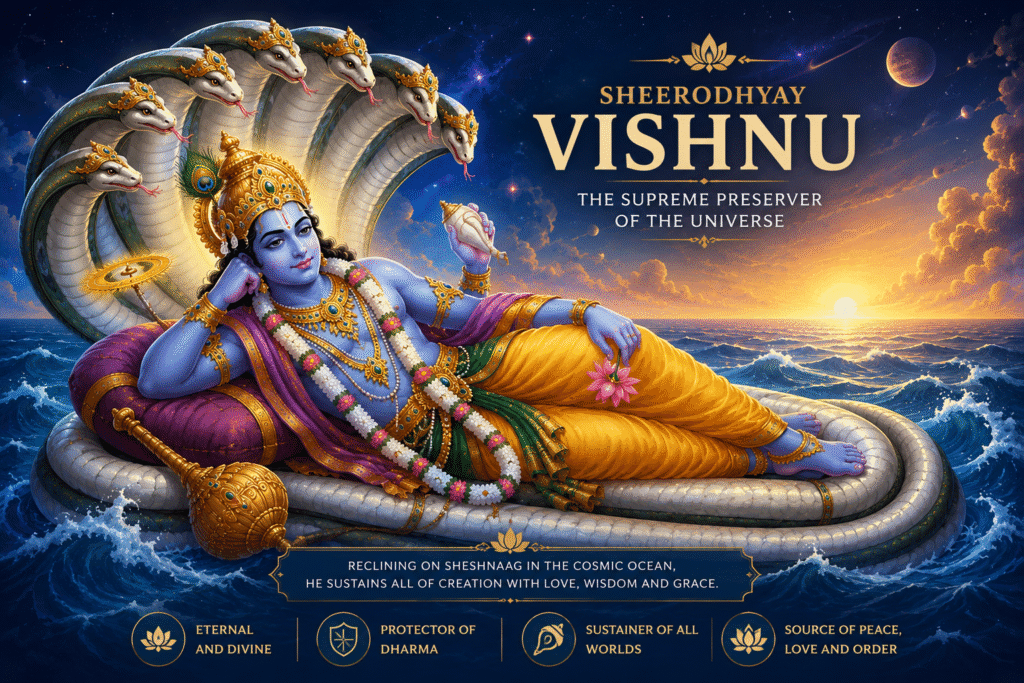
In Hindu mythology, Lord Vishnu is revered as the preserver of the universe, embodying the principles of balance and harmony. His role in maintaining the cosmic order is manifested through his various avatars, each representing a divine intervention at critical times in history. Among these, the 24 avatars stand out as the epitome of divine manifestations, showcasing his versatility and purpose in human affairs.
The Significance of the Avatars
Role of Lord Vishnu in restoring Dharma
Each avatar of Lord Vishnu serves a unique purpose, often arising in response to the proliferation of evil or the deterioration of dharma. From the fearless Matsya, the fish who saved humanity, to the heroic Rama who vanquished the demon king Ravana, these incarnations illustrate the diverse ways in which Vishnu intervenes for the protection of cosmic order. The avatars are not merely tales of valor but convey deeper philosophical truths that guide moral conduct and spiritual growth.
Why Lord Vishnu Takes Avatars?
Hindu scriptures tell us that whenever evil grows stronger than good, when lies cover truth, or when injustice defeats justice, Lord Vishnu descends to Earth. His purpose is always the same: to protect Dharma (righteousness) and to guide humanity back to the right path.
These divine incarnations of Lord Vishnu are originally chronicled in the venerable Bhagavad Gita. In total, Lord Vishnu has manifested Himself in 24 unique avatars upon the earthly plane. His purpose? To engage in relentless combat against the forces of maleficence, while simultaneously illuminating the path of righteousness for humanity.
Dharma represents the prescribed actions that foster spiritual growth and progression, while adharma signifies unrighteousness. When unrighteousness prevails, the divine creator and administrator of the world intervenes, descending to restore dharma. (In the form of any of the 4 categories of Avatars. What are these categories?? Click here to know…)
What are the 24 Avatars of Lord Vishnu?
The Bhagavad Gita mentions these divine descents. In total, Lord Vishnu has taken 24 different avatars. Each one appeared at a different time in history, with a specific role to fight evil and restore balance.
1. Adi Purush
The first and primary avatar of Lord Vishnu is Adi Purush.
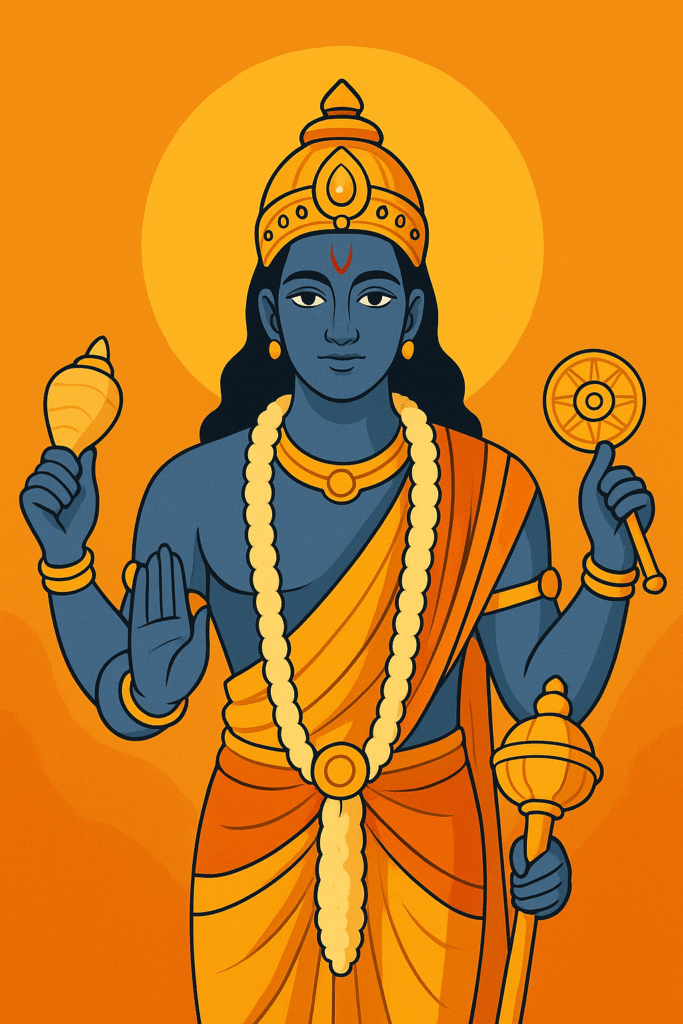
The paramount incarnation of Lord Vishnu, embodying the very essence of divine existence.
Adi Purush is the primordial form of Lord Vishnu and the source of all creation. He represents the eternal Supreme Being from whom the universe originates and into whom it ultimately dissolves. As the first manifestation of the Divine, Adi Purush symbolizes infinite existence, supreme consciousness, and cosmic order.
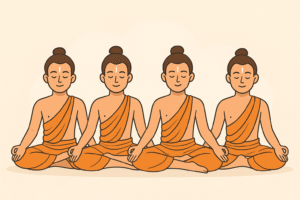
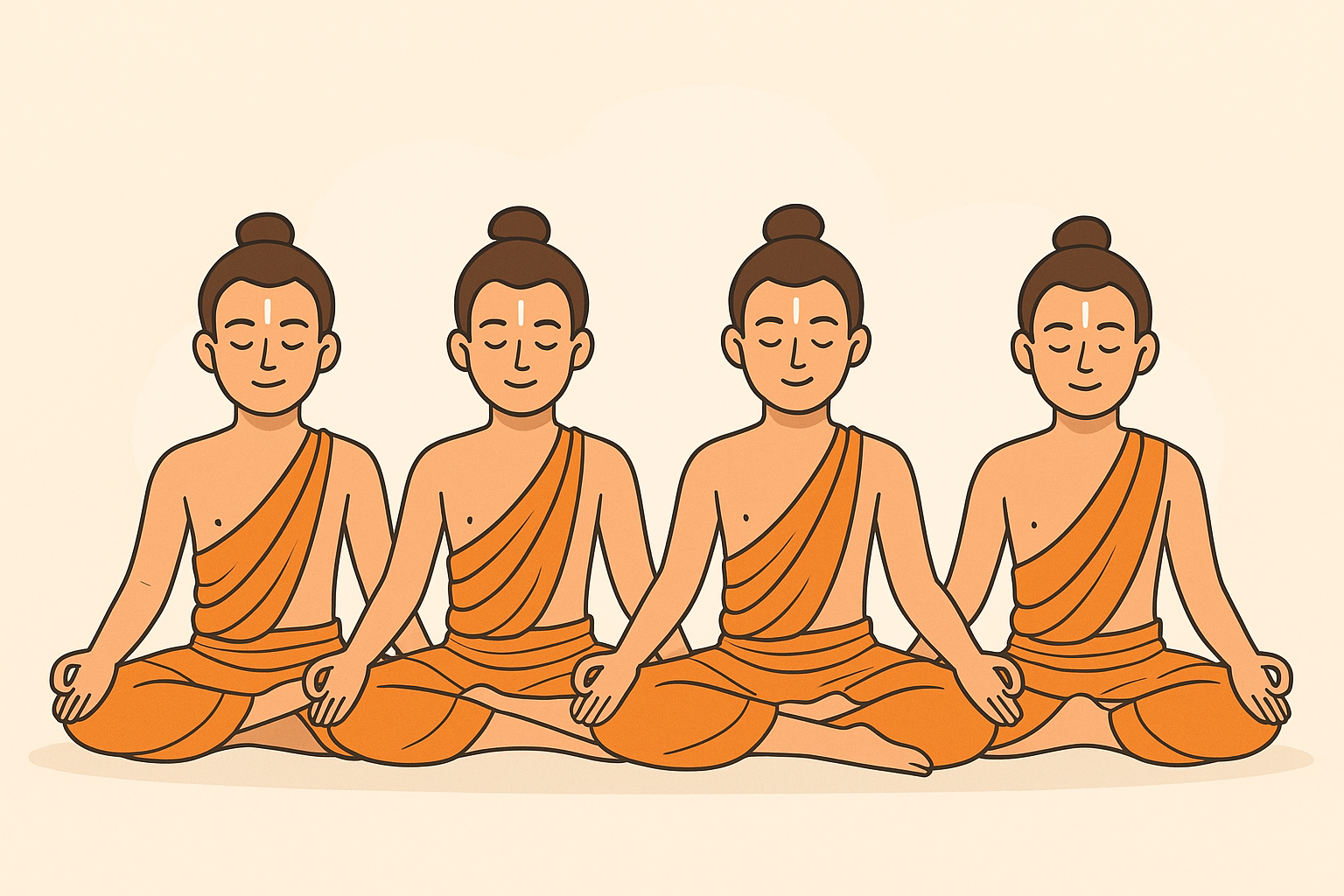
2. Four Kumars
The first four conscious beings created by Lord Brahma, known as Four Kumars.
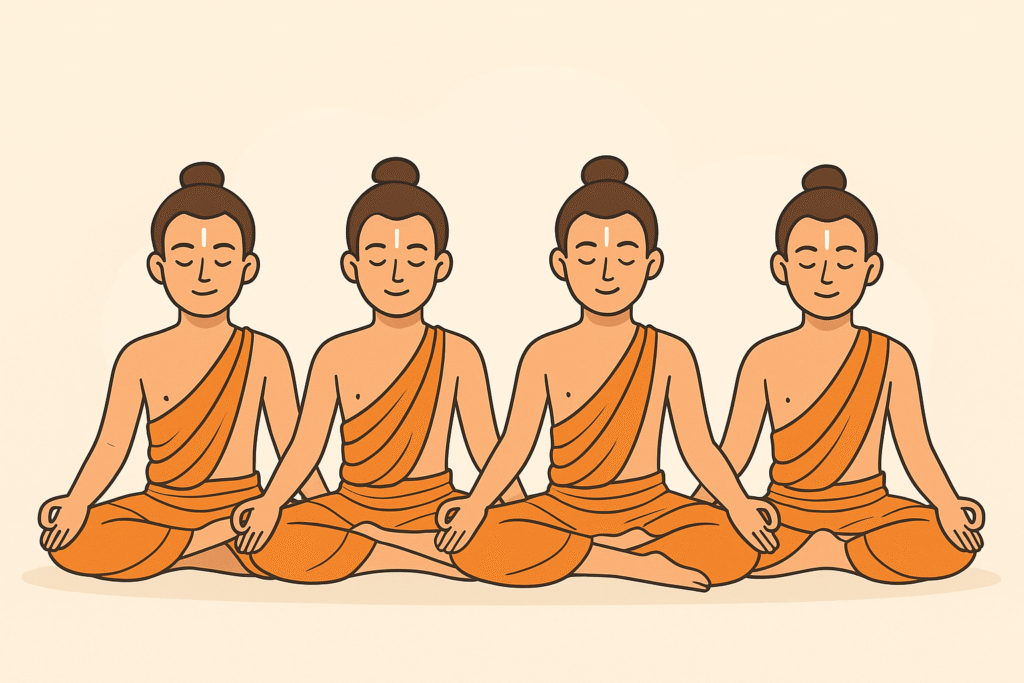
The inaugural quartet of sentient beings, conceived by the divine hand of Lord Brahma himself.
The Four Kumars—Sanaka, Sanandana, Sanatana, and Sanatkumara—are the first mind-born sons of Lord Brahma. Though they appear as young boys, they possess profound spiritual wisdom. They chose a life of celibacy and renunciation, dedicating themselves to the pursuit of divine knowledge and devotion to Lord Vishnu.
3. Narada
Son of Lord Brahma, and a great devotee of Lord Vishnu.
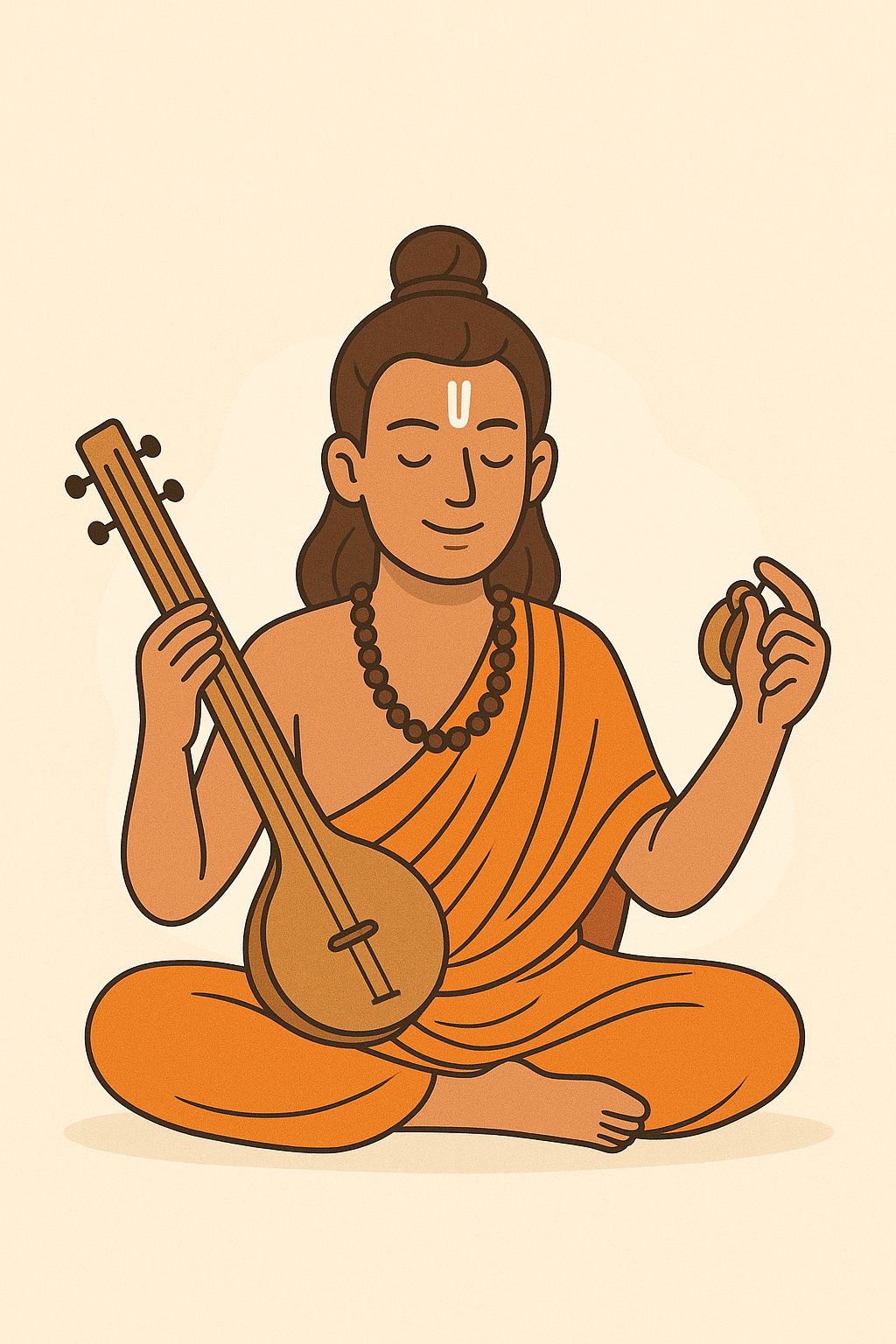
Narada, the progeny of Lord Brahma, emerges as a fervent adherent of Lord Vishnu, exuding profound devotion.
Sage Narada is one of the greatest devotees of Lord Vishnu and the celestial messenger among the gods, sages, and devotees. Carrying his veena, he travels across the three worlds spreading the glories of God, inspiring devotion, and guiding seekers toward the path of bhakti. His wisdom and unwavering devotion make him one of Hinduism’s most revered sages.
4. Nara Narayana
Twin sages, both representing avatars of Lord Vishnu.
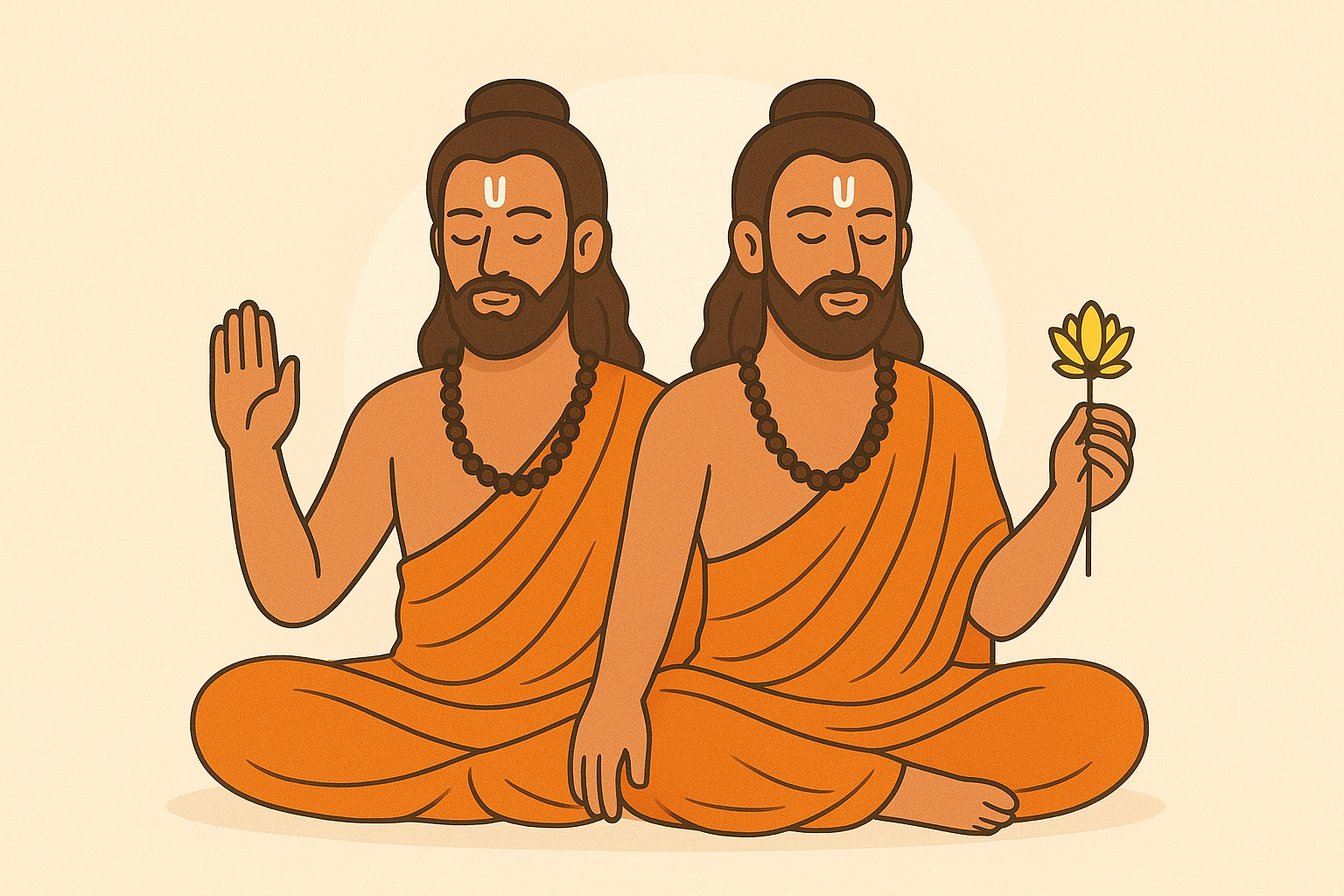
Nara and Narayana, twin sages, jointly epitomize the avataric manifestation of Lord Vishnu.
Nara and Narayana are twin sage incarnations of Lord Vishnu who performed intense penance at the sacred hermitage of Badrikashrama. They symbolize the perfect harmony between human effort (Nara) and divine grace (Narayana). Their lives inspire spiritual discipline, meditation, and unwavering dedication to righteousness.
5. Kapila
A wise sage, known as an incarnation of Vishnu.
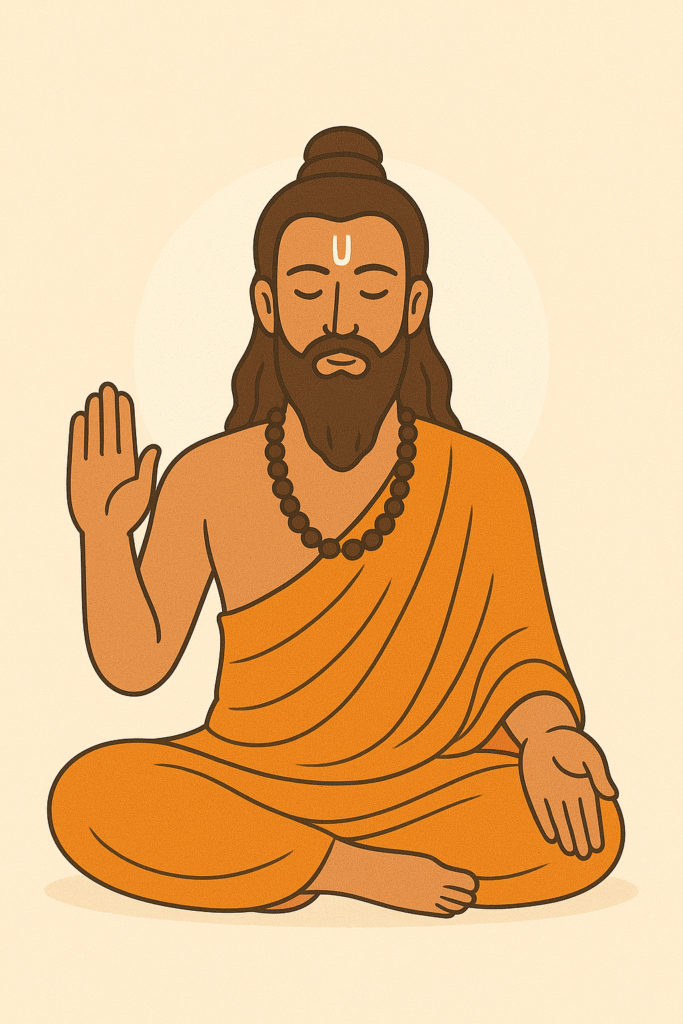
Kapila, an incarnation of Lord Vishnu, is extolled as a luminary in spiritual wisdom.
Kapila Muni is regarded as an incarnation of Lord Vishnu and the founder of the Samkhya philosophy. Through His teachings, He explained the distinction between the soul and material nature, helping seekers attain self-realization and liberation. His wisdom continues to influence Hindu philosophy and spirituality.
6. Dattatreya
A unique form that combines the powers of Brahma, Vishnu, and Shiva.
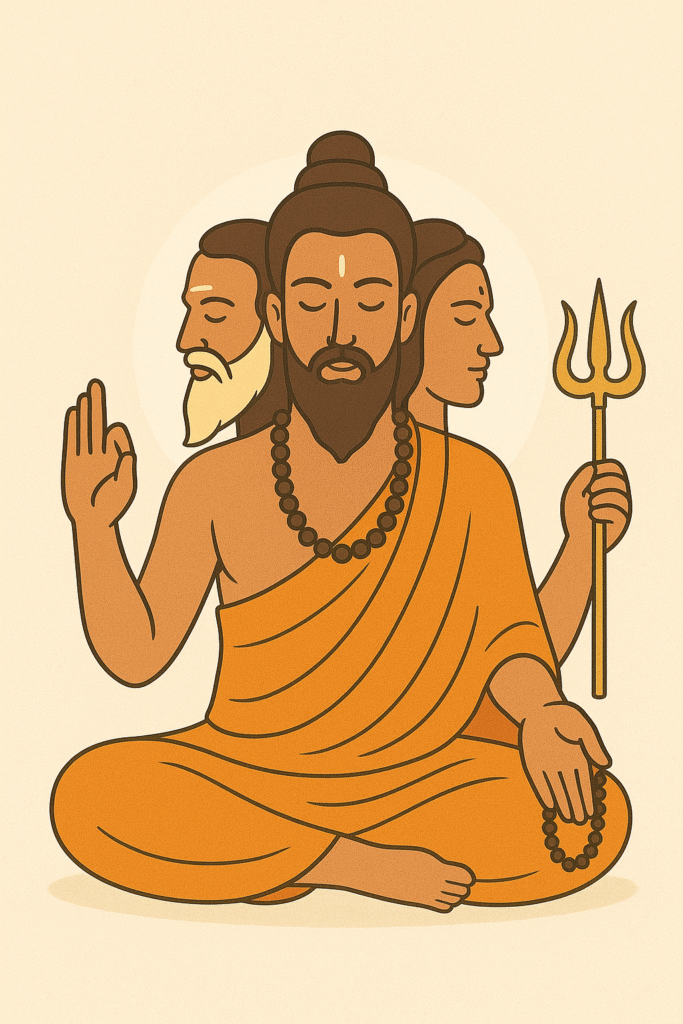
Dattatreya represents a trinity of divinity, encompassing Brahma, Vishnu, and Shiva in a singular form.
Dattatreya is the combined manifestation of the Divine Trinity—Brahma, Vishnu, and Shiva. He is revered as the eternal Guru who teaches that true wisdom can be gained from every aspect of creation. His life reflects detachment, simplicity, compassion, and the pursuit of spiritual enlightenment.
7. Yajna
The spirit of sacrifice, connected to sacred fire rituals.
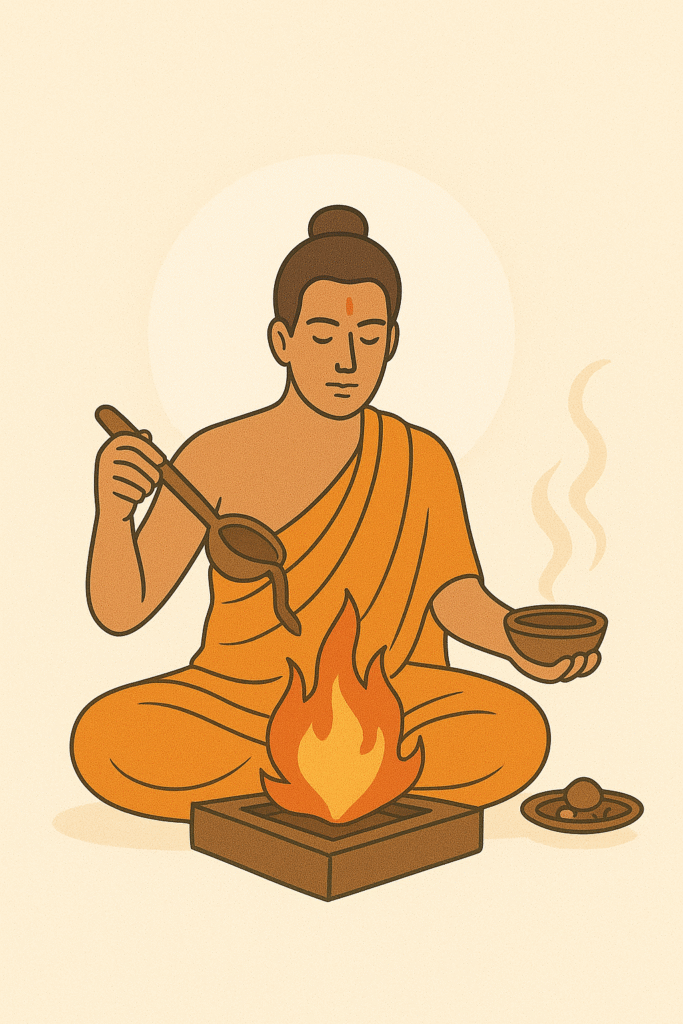
A sacred rite in which flames are kindled, and offerings are made to beseech divine favor from celestial deities.
Yajna is the sacrificial incarnation of Lord Vishnu who embodies the sacred Vedic rituals performed to maintain harmony between humanity and the divine. During the Svayambhuva Manvantara, He protected righteousness and upheld cosmic order by serving as Indra, the king of the heavenly planets.
8. Rishabha
A spiritual guide and teacher.
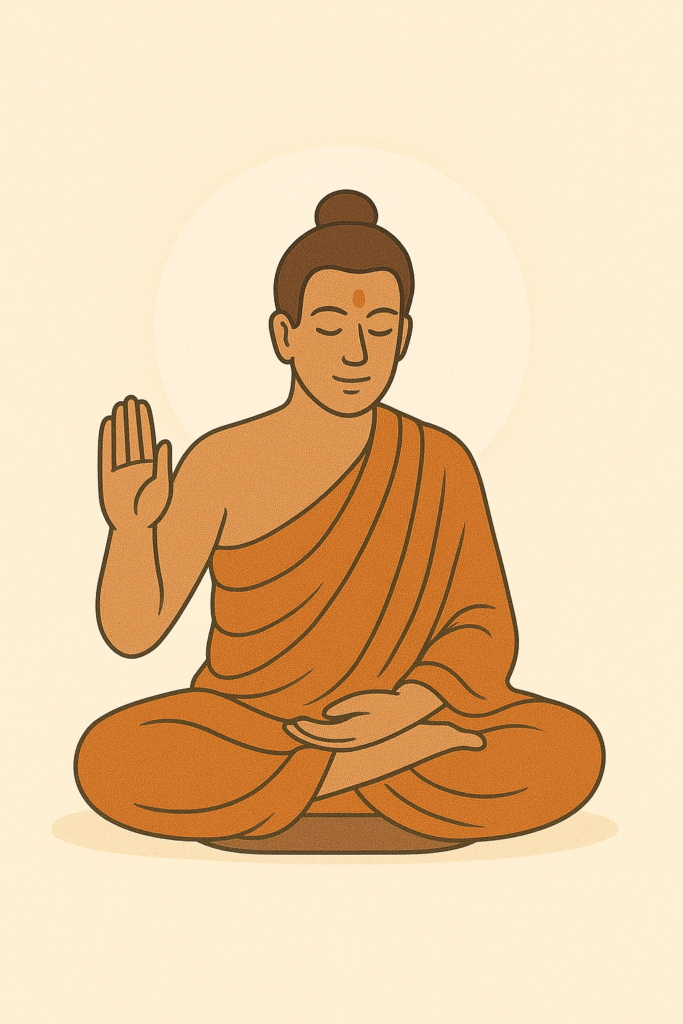
Rishabha, a revered spiritual luminary, assumes the mantle of a divine preacher.
Rishabha Deva appeared as an ideal king, spiritual teacher, and enlightened soul. After ruling His kingdom with justice and compassion, He renounced worldly life to demonstrate the path of self-control, detachment, and liberation. His teachings emphasize the importance of spiritual realization over material pursuits.
9. Prithu
The first sacred king on Earth.
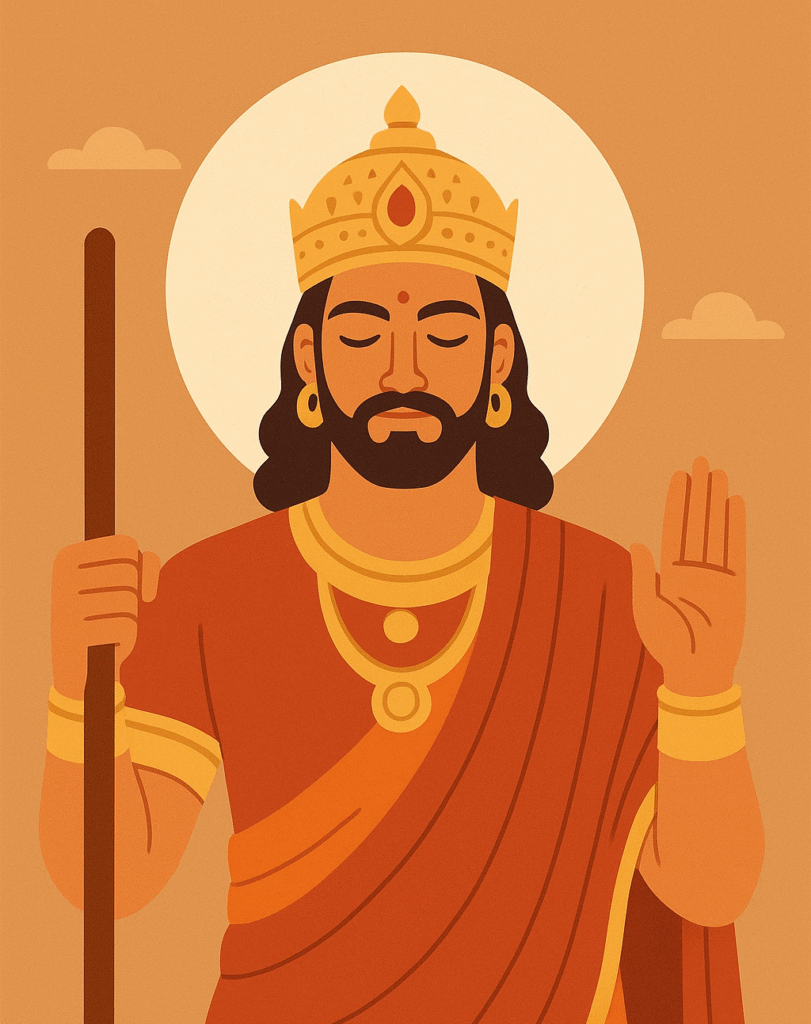
Prithu, the inaugural sacred monarch, exemplifies virtuous kingship and leadership.
King Prithu is celebrated as the first ideal monarch and an incarnation of Lord Vishnu. He restored prosperity by nurturing the Earth and ensuring the welfare of His subjects. His reign became a model of righteous leadership, justice, and responsible governance, earning Him lasting respect in Hindu tradition.
10. Dhanvantari
The god who appeared with the pot of Amrit, the nectar of immortality.
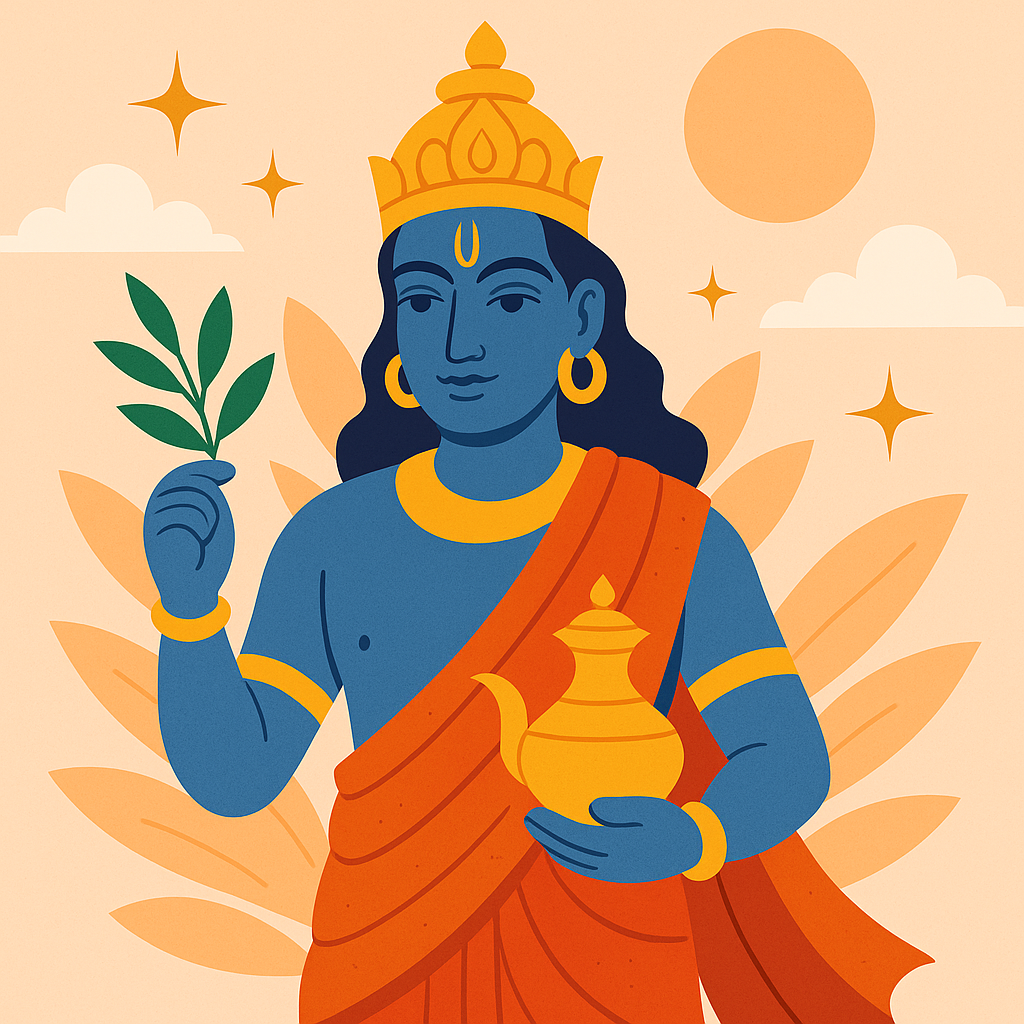
Dhanvantari, bearing the elixir of immortality (Amrit) in a celestial vessel, emerges as a harbinger of wellness.
Dhanvantari emerged from the churning of the ocean (Samudra Manthan) holding the pot of Amrita, the nectar of immortality. He is revered as the divine physician and the father of Ayurveda. His appearance symbolizes healing, longevity, health, and the preservation of life.
11. Mohini
The only female form of Vishnu, known for her charm and grace.
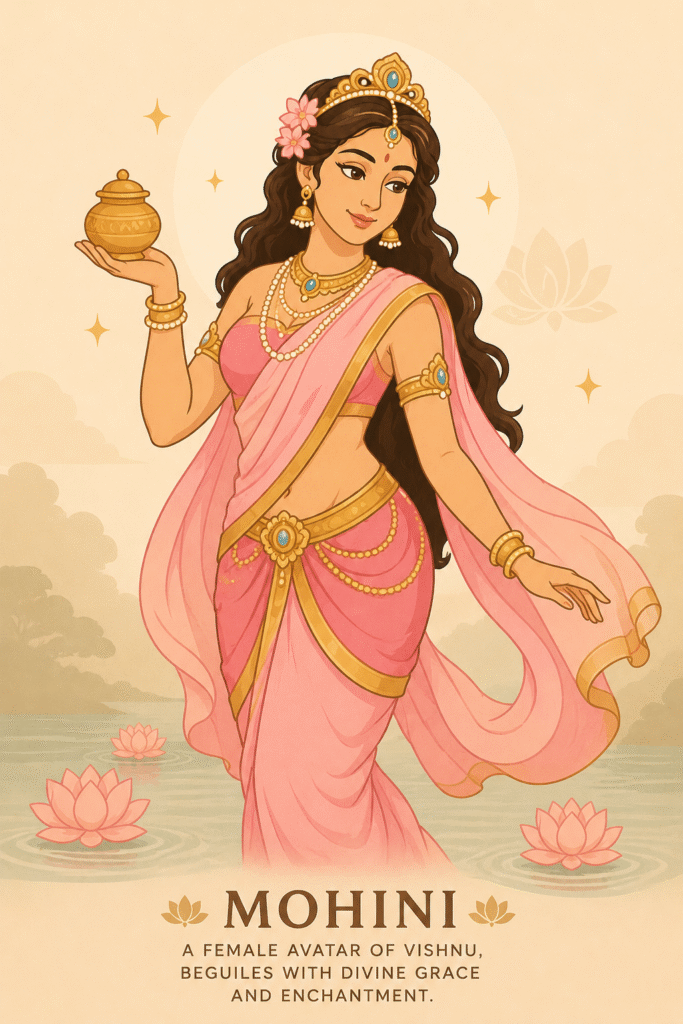
Mohini, a female avatar of Vishnu, beguiles with divine grace and enchantment.
Mohini is the enchanting female incarnation of Lord Vishnu. She appeared during the Samudra Manthan to distribute the nectar of immortality exclusively to the devas, preventing it from falling into the hands of the asuras. Mohini represents divine intelligence, beauty, and the triumph of wisdom over deception.
12. Hayagriva
A being with the body of a man and the head of a horse, symbolizing wisdom
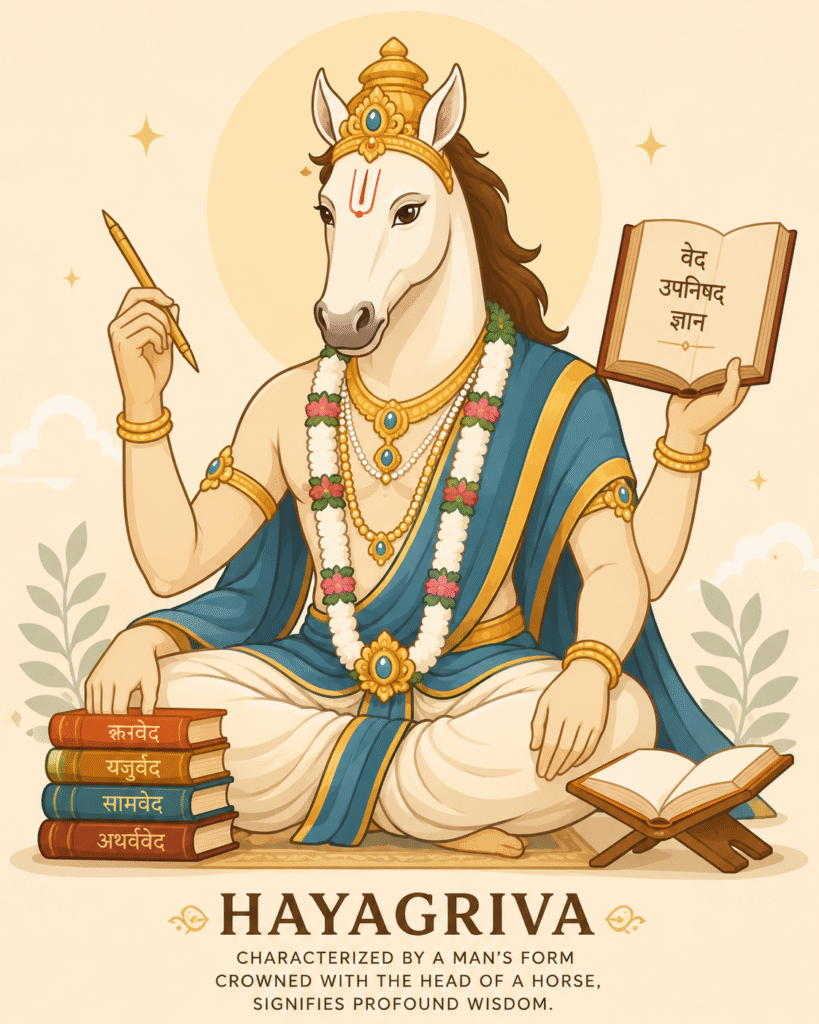
Hayagriva, characterized by a man’s form crowned with the head of a horse, signifies profound wisdom.
Hayagriva, depicted with the body of a man and the head of a horse, is the embodiment of divine wisdom and knowledge. He restored the stolen Vedas after defeating the forces of ignorance, ensuring that sacred knowledge remained available for the welfare of humanity. He is widely worshipped as the deity of learning and education.
13. Vyasa
The sage who composed the Mahabharata and divided the Vedas.
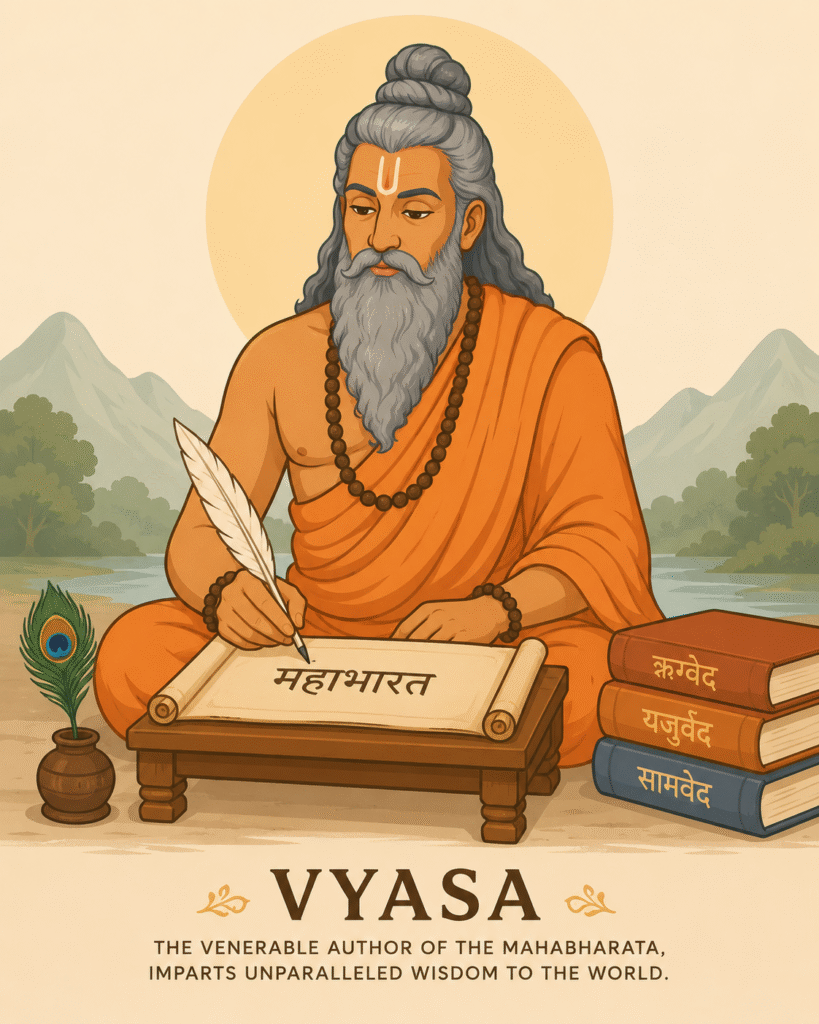
Vyasa, the venerable author of the Mahabharata, imparts unparalleled wisdom to the world.
Ved Vyasa is one of the greatest sages in Hindu history and is regarded as an incarnation of Lord Vishnu. He compiled the four Vedas, authored the Mahabharata, and composed the eighteen Puranas. Through his writings, he preserved India’s spiritual heritage and made sacred knowledge accessible to future generations.
14. Matsya
The fish avatar, who saved sacred scriptures and people during a great flood.
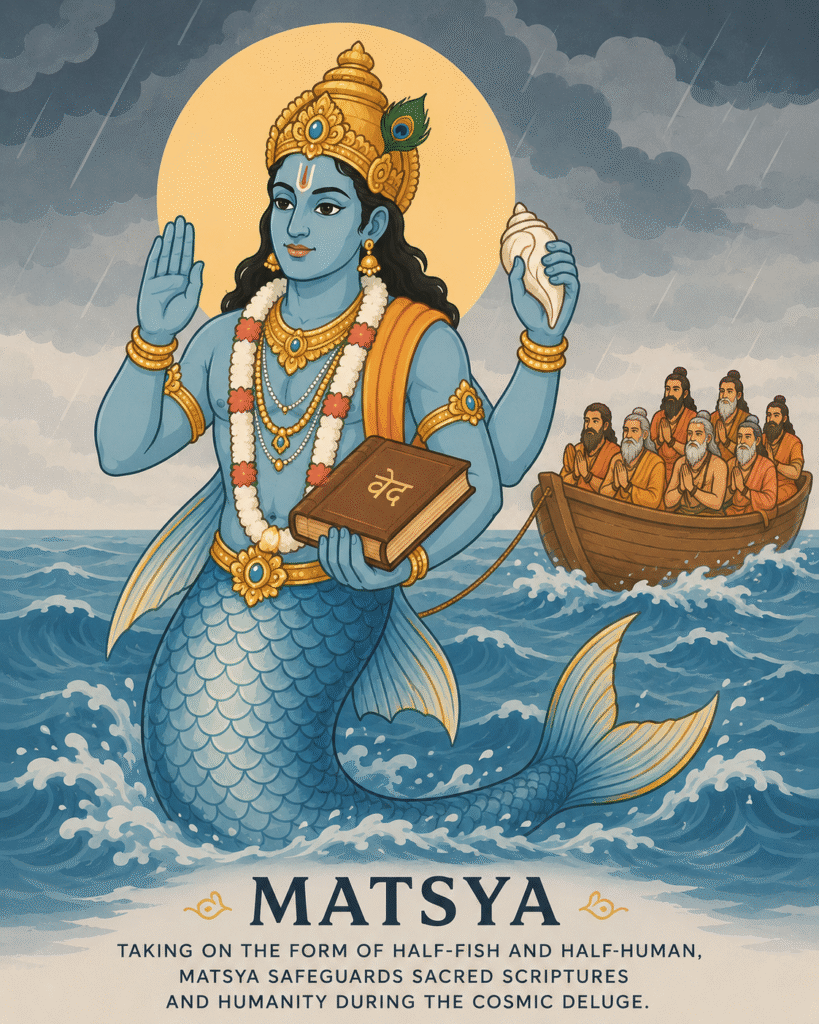
Matsya, taking on the form of half-fish and half-human, safeguards sacred scriptures and humanity during the cosmic deluge.
Matsya, the fish incarnation of Lord Vishnu, appeared during a great cosmic flood. He rescued King Satyavrata (later Vaivasvata Manu), protected the Vedas, and guided the ark carrying the seeds of life to safety. Matsya symbolizes divine protection, guidance, and preservation during times of crisis.
15. Kurma
The tortoise form, who supported the churning of the ocean (Samudramanthan).
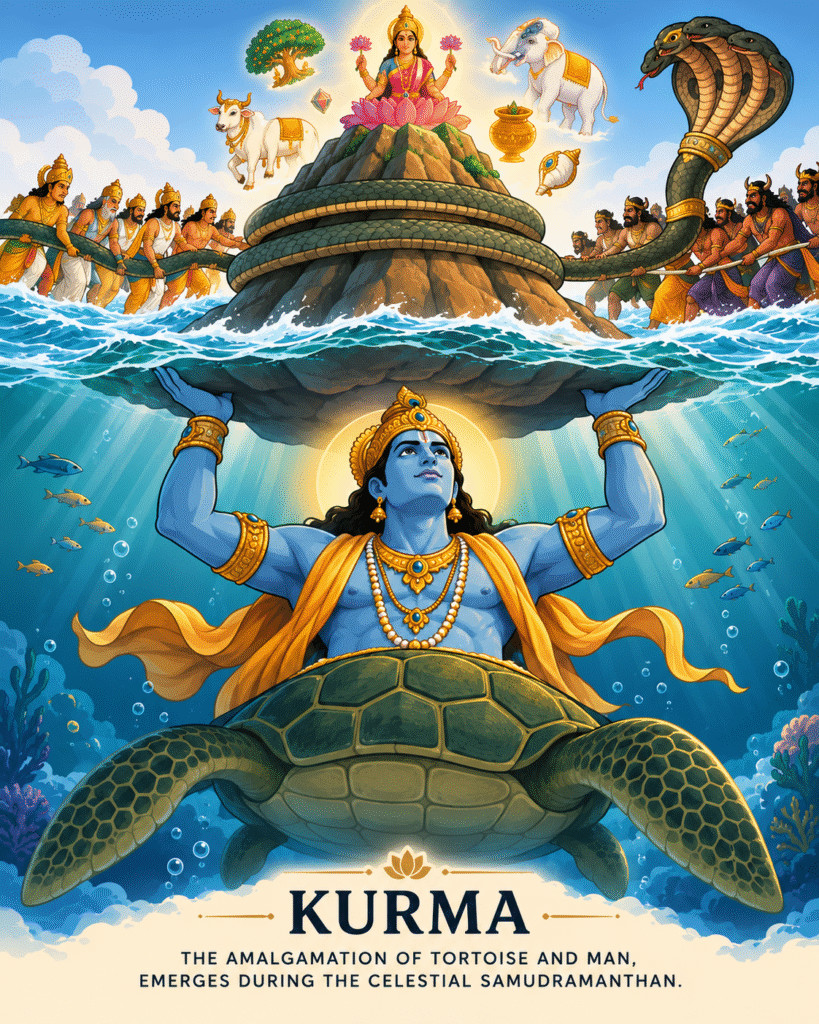
Kurma, the amalgamation of tortoise and man, emerges during the celestial Samudramanthan.
Kurma, the giant tortoise incarnation, supported Mount Mandara on His back during the churning of the ocean of milk. Without His unwavering strength, the churning could not have been completed. Kurma represents stability, patience, endurance, and unwavering support in fulfilling great endeavors.
16. Varaha
The boar avatar, who lifted the Earth from the cosmic ocean.
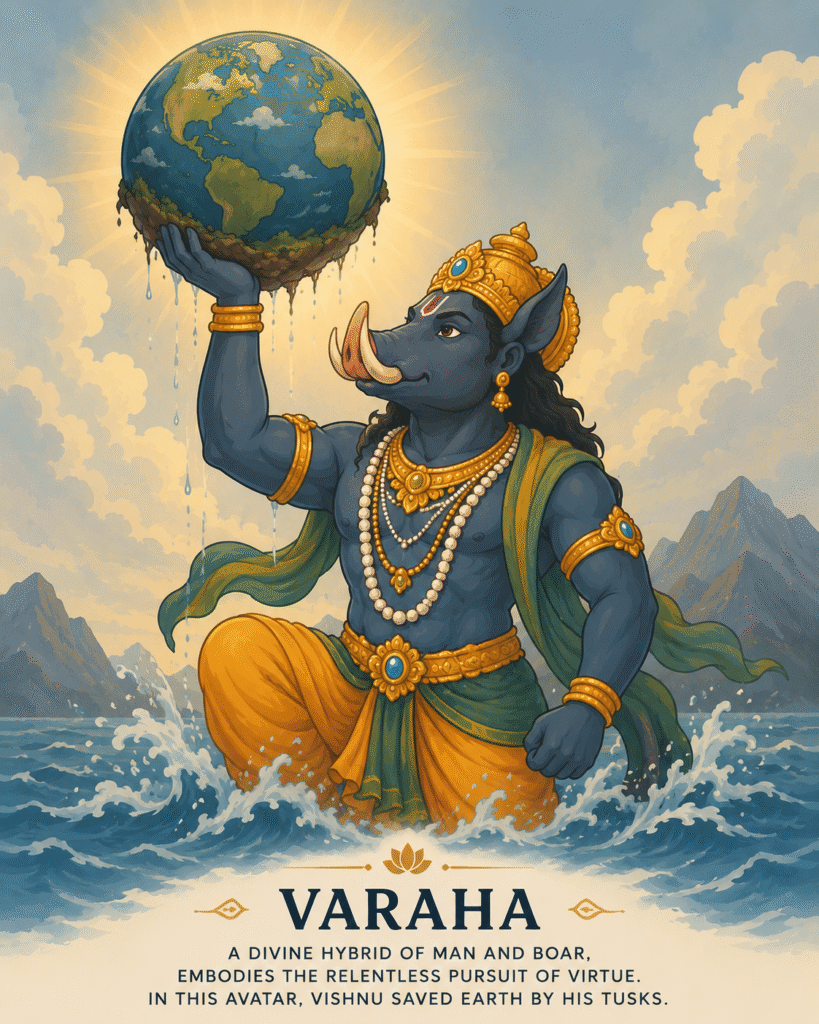
Varaha, a divine hybrid of man and boar, embodies the relentless pursuit of virtue.
Varaha, the mighty boar incarnation of Lord Vishnu, rescued Mother Earth after the demon Hiranyaksha submerged her beneath the cosmic ocean. Lifting the Earth upon His tusks, He restored balance to creation and defeated the forces of chaos. Varaha symbolizes divine strength, courage, and protection.
17. Narsimha
The half-man, half-lion form, who destroyed the demon Hiranyakashipu.
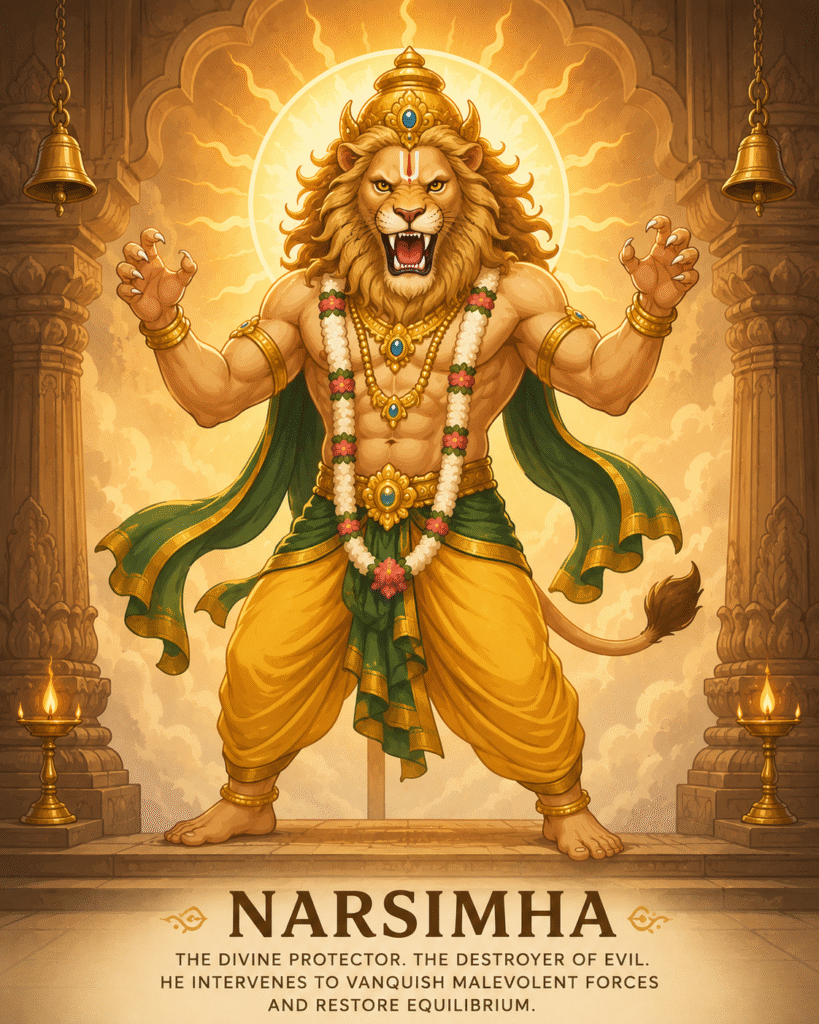
Narsimha, with the visage of half-man and half-lion, intervenes to vanquish malevolent forces and restore equilibrium.
Narasimha, the half-man and half-lion incarnation, appeared to protect His devoted follower Prahlada and destroy the tyrant Hiranyakashipu. Manifesting at twilight, neither inside nor outside, He fulfilled every condition of the demon’s boon while restoring justice. Narasimha embodies divine protection, fearlessness, and the victory of devotion over evil.
18. Vamana
The dwarf avatar, who humbled the demon king Mahabali.
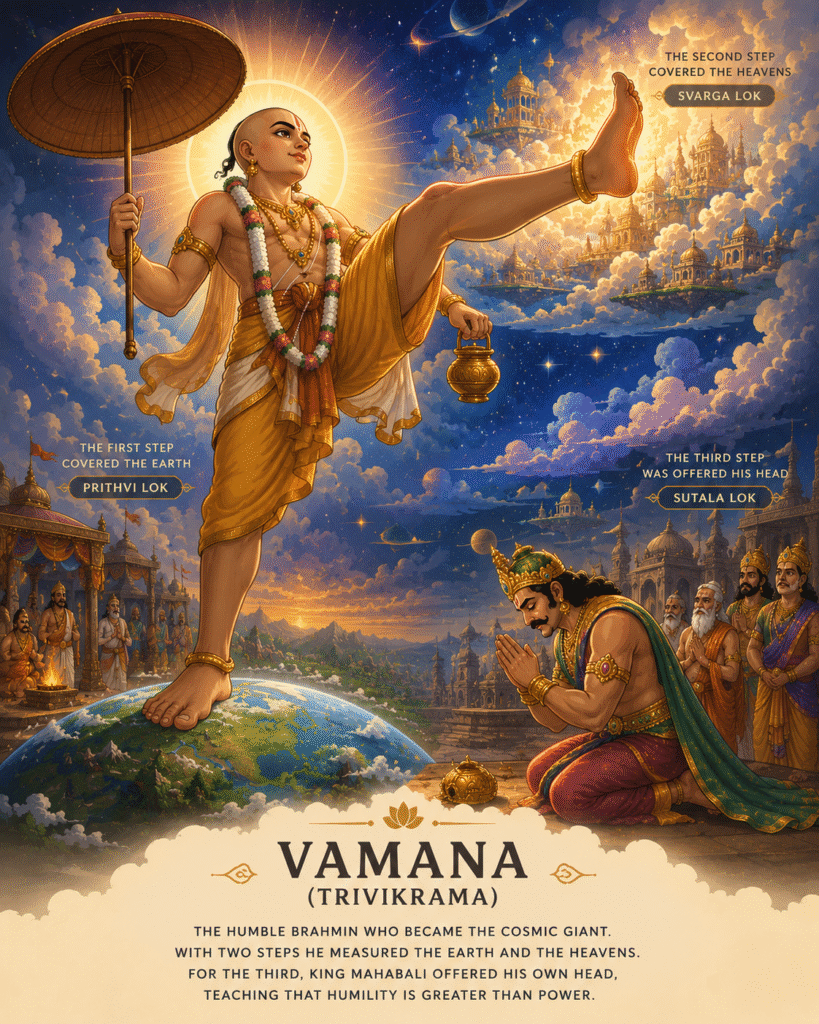
Vamana, the diminutive divine incarnation, descends to curtail the burgeoning might of the demonic monarch Mahabali.
After King Mahabali grants the boon, Vamana transforms into Trivikrama, the cosmic form of Vishnu. With the first step He covers the Earth, the second spans the heavens, and with nowhere left for the third, Mahabali bows his head in surrender. Vishnu places His foot on Mahabali’s head and grants him rulership of Sutala while restoring cosmic order.
19. Parshurama
A warrior sage with an axe, who destroyed corrupt rulers.
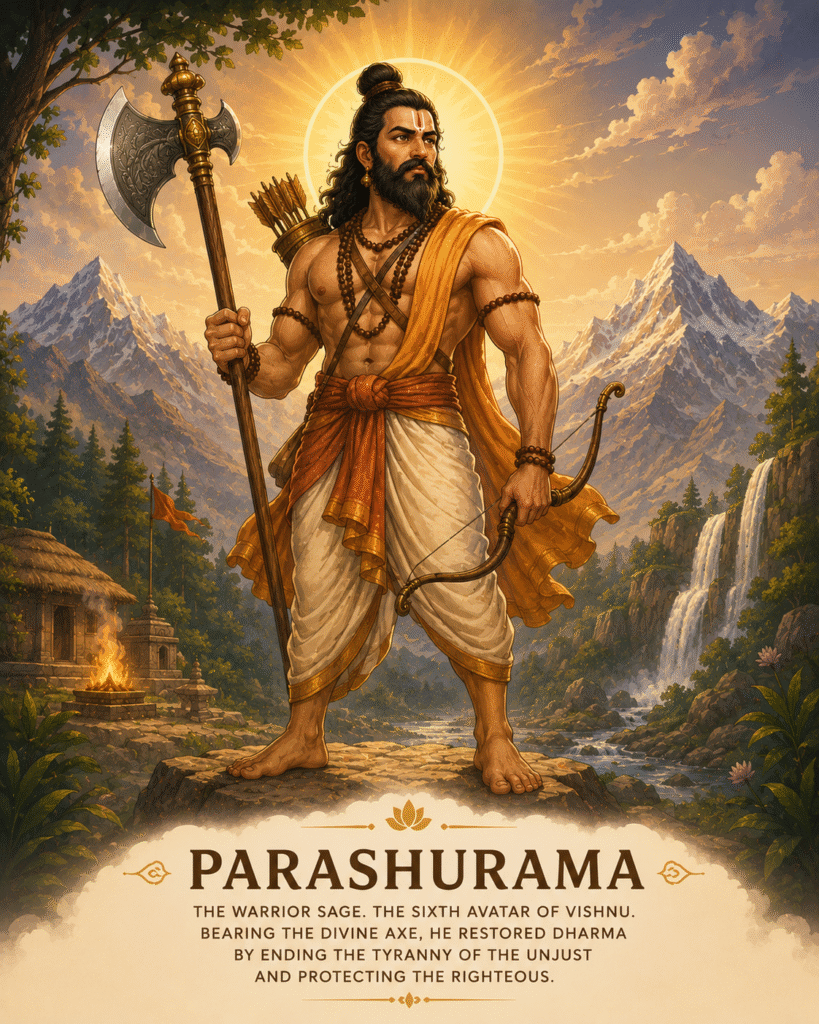
Parshuram, depicted as a sage wielding an axe, embodies valor and rectitude.
Parashurama, the warrior-sage, wielded the divine axe gifted by Lord Shiva. He appeared to end the oppression caused by corrupt rulers and restore Dharma. Though fierce in battle, He remained a devoted sage and is believed to be one of the Chiranjeevis, destined to live until the end of the present age.
20. Rama
The prince of Ayodhya, who defeated Ravana and became the ideal king.
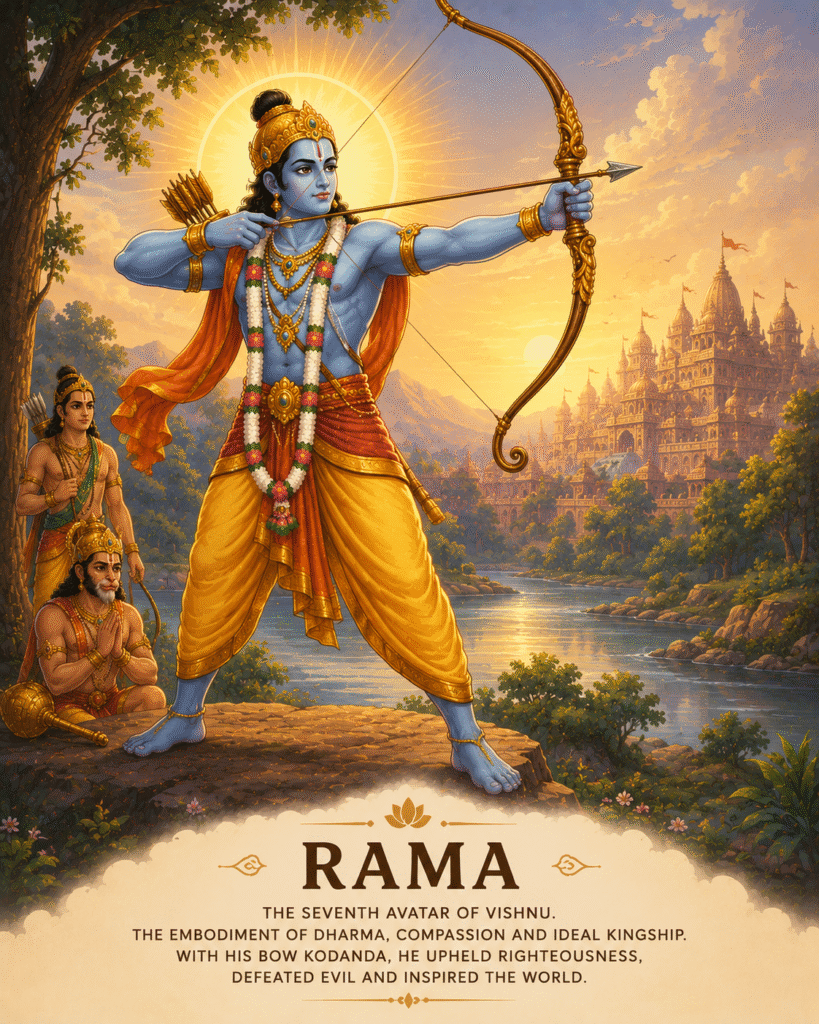
Rama, taking human form, embarks on a quest to vanquish maleficence and safeguard His devout followers.
Lord Rama, the prince of Ayodhya, is revered as the embodiment of truth, honor, and righteousness. His life, narrated in the Ramayana, demonstrates unwavering commitment to duty, compassion, and justice. By defeating Ravana and rescuing Sita, Rama established the eternal triumph of Dharma over evil.
21. Balarama
The elder brother of Krishna, known for strength and wisdom.
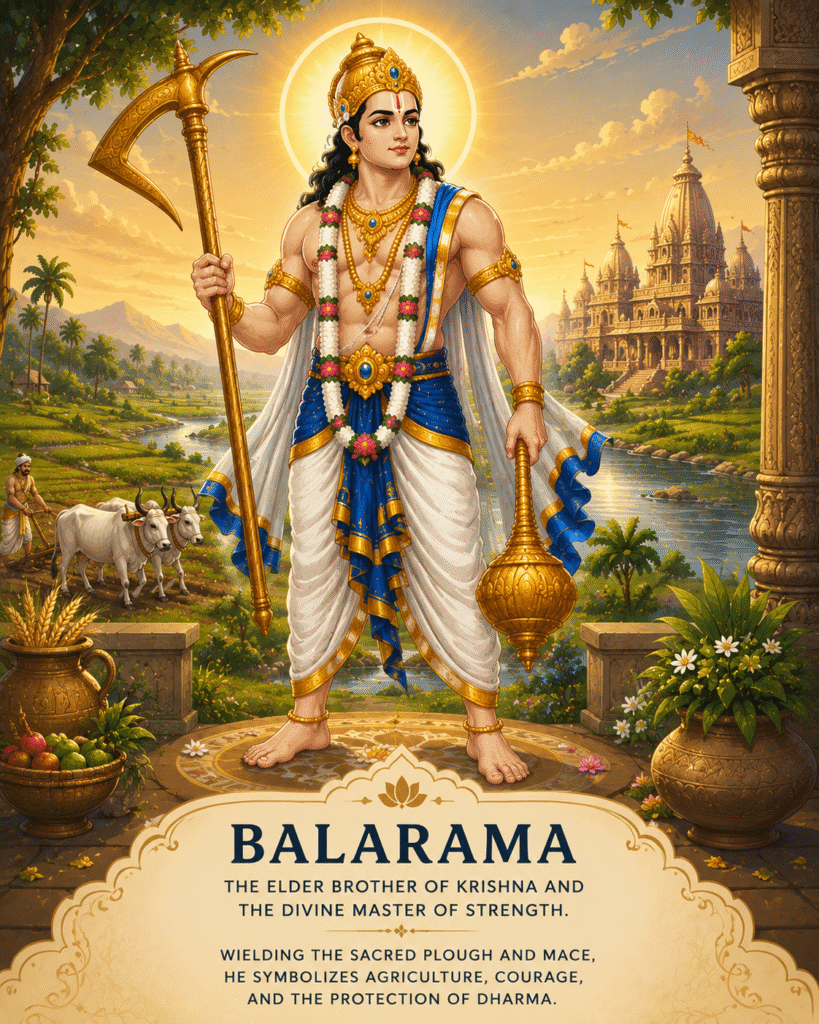
Balrama, featured prominently in the Mahabharata, assumes the role of Lord Krishna’s elder brother.
Balarama, the elder brother of Lord Krishna, is renowned for His immense strength, simplicity, and dedication to righteousness. Carrying the plough (Hala) and mace (Gada), He symbolizes agriculture, physical strength, and the protection of farmers and society. His life teaches humility, discipline, and honest labor.
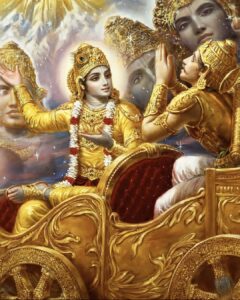
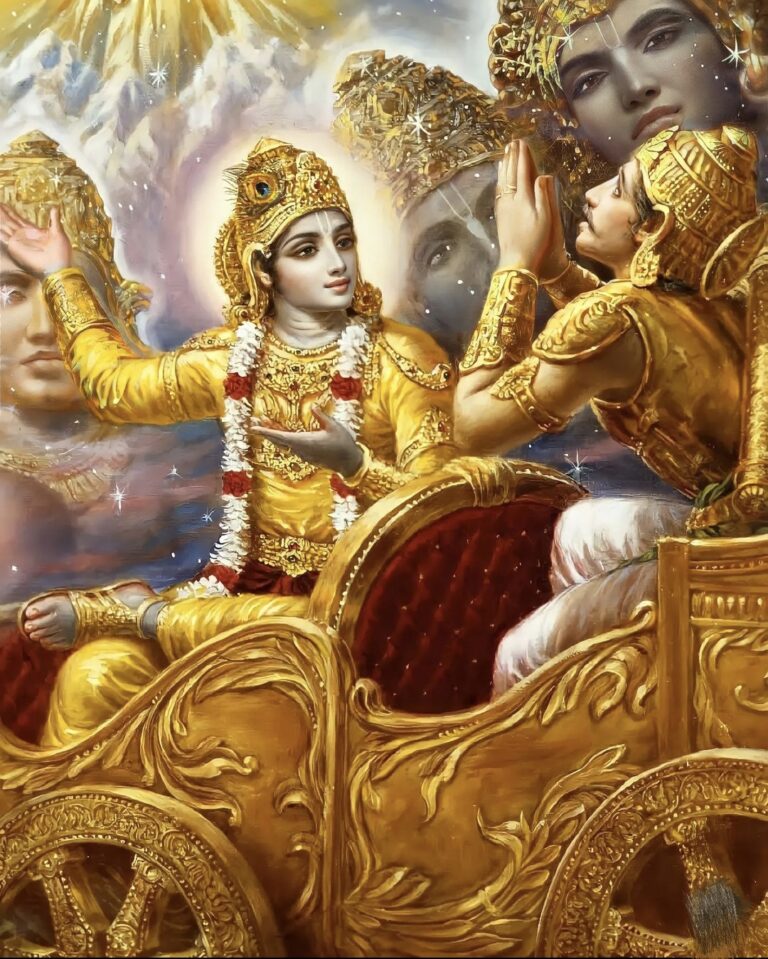
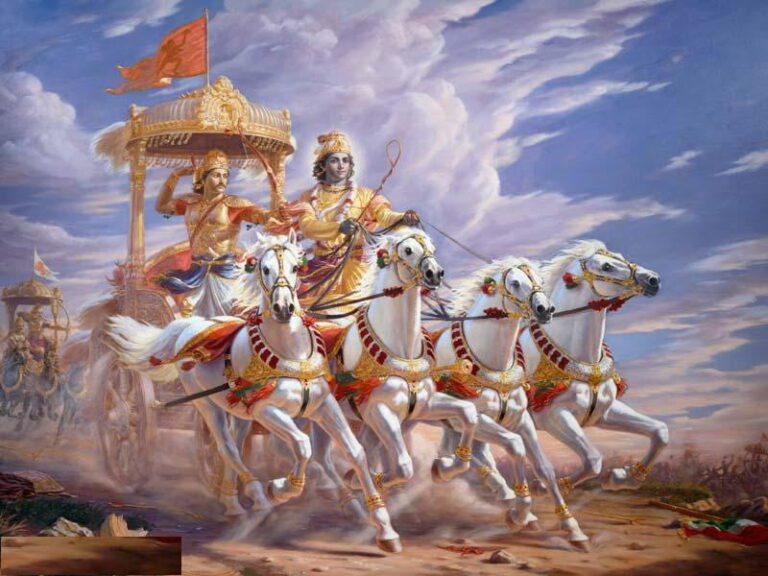
22. Krishna
The divine incarnation who killed many demons and delivered the teachings of the Bhagavad Gita.
Lord Vishnu, incarnated as Krishna, engages in the destruction of demons and wicked monarchs in neighboring realms.
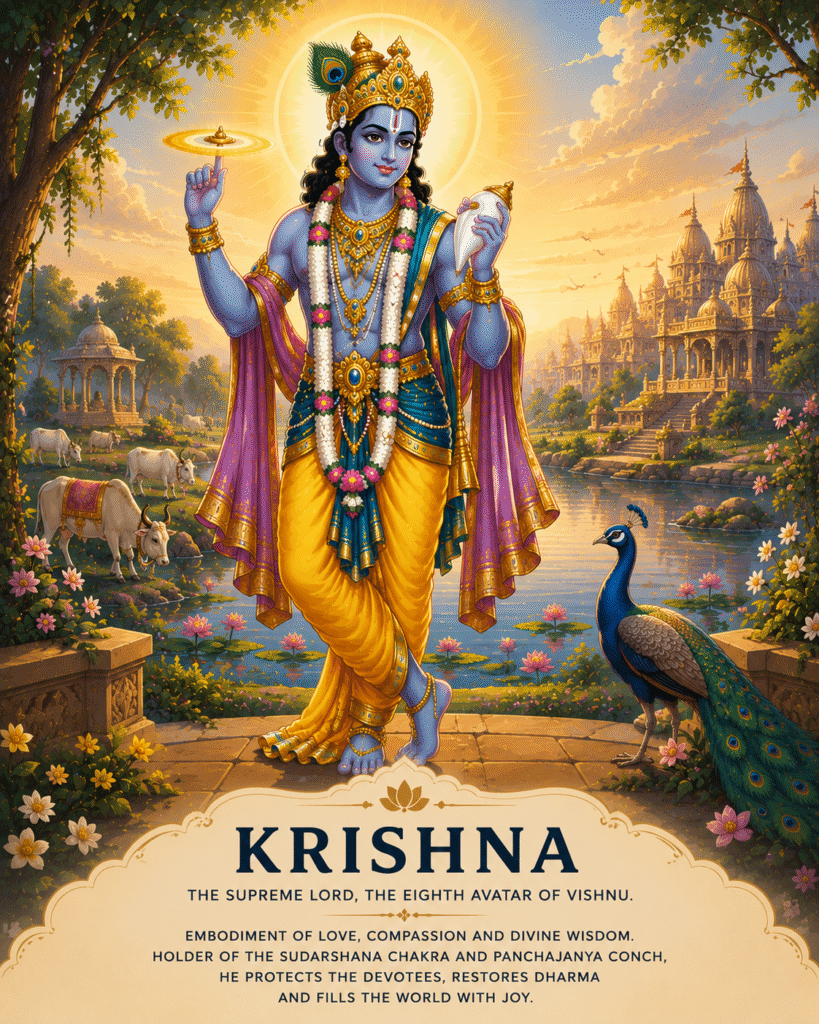
The scriptures describe Krishna as a purna avatar—the Complete Incarnation of Lord Vishnu.
Lord Krishna is regarded as the Supreme Personality of Godhead and one of the most beloved incarnations of Lord Vishnu. Through His divine pastimes, guidance in the Bhagavad Gita, and protection of His devotees, He revealed the path of devotion, wisdom, and selfless action. Krishna’s life embodies divine love, compassion, and the ultimate victory of truth.
At the same time, many traditions also speak of Krishna as the Supreme Being Himself, with Lord Vishnu regarded as an expansion of Krishna. In this context, however, we are referring specifically to the Krishna who incarnated on Earth.
This earthly incarnation of Krishna is said to have embodied all the divine qualities of the Supreme Krishna, who exists beyond even Vishnu.
Did you know? Lord Vishnu is an expansion of Krishna? What are these Expansions?
23. Buddha
Seen as an avatar of Vishnu, who spread peace, compassion, and non-violence.
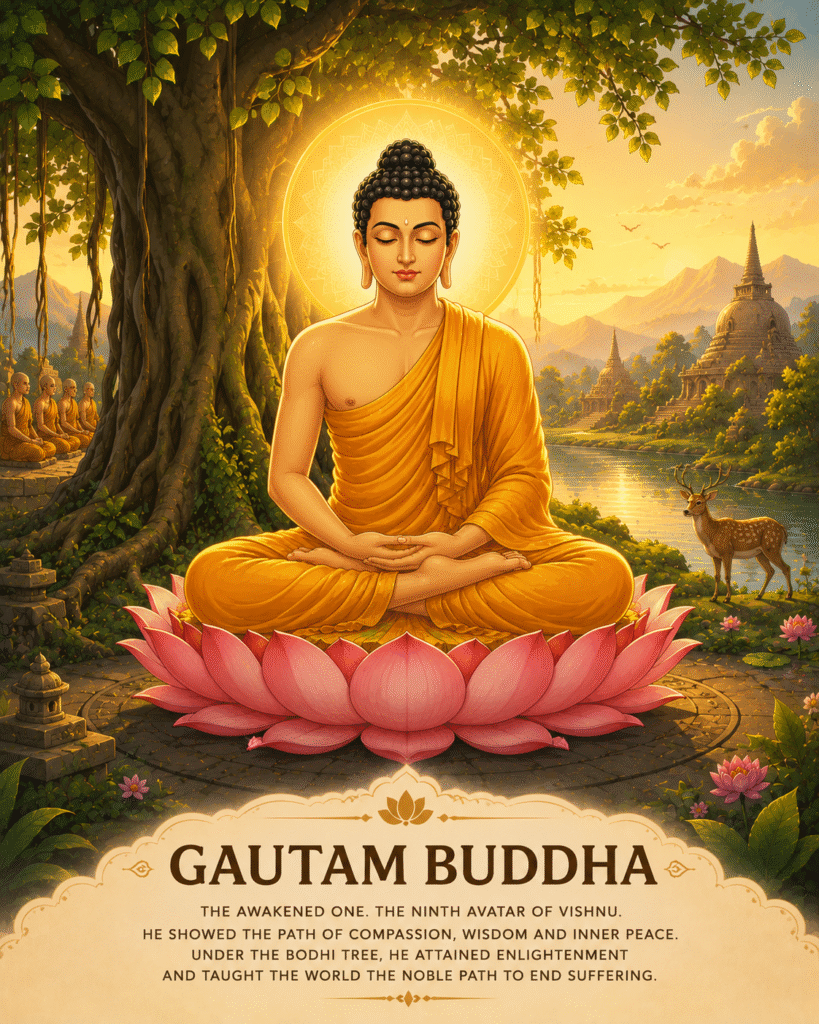
The incorporation of Buddha into the Hindu pantheon serves as a strategic effort to mitigate the influence of Buddhism.
According to several Hindu traditions, Gautama Buddha is recognized as an incarnation of Lord Vishnu. He taught compassion, non-violence, mindfulness, and the Middle Path, encouraging people to overcome suffering through wisdom and self-discipline. His teachings continue to inspire millions around the world.
24. Kalki
Kalki, the future avatar of Vishnu, is poised to manifest and fulfill His divine mission in a world yet to come.
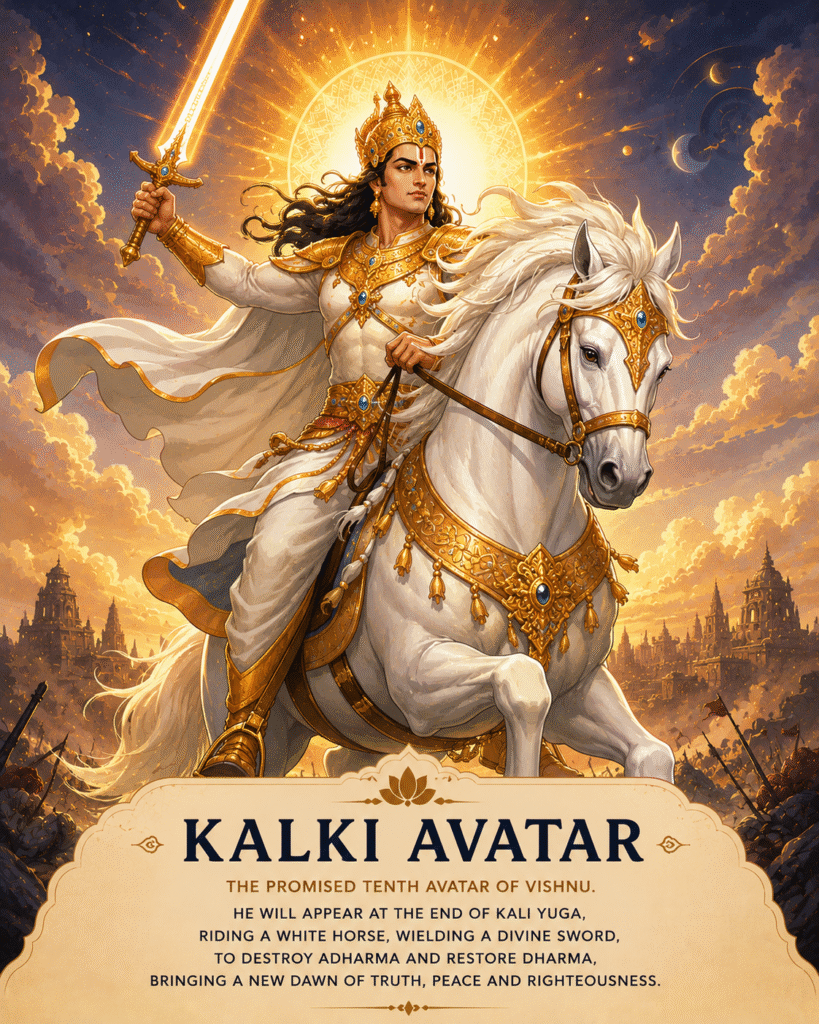
The future avatar, yet to appear, who will end the present age of darkness (Kali Yuga) and restore Dharma.
Kalki is the future and final avatar of Lord Vishnu, prophesied to appear at the end of Kali Yuga. Riding a majestic white horse and wielding a radiant sword, He will destroy the forces of Adharma and restore righteousness to the world. Kalki symbolizes hope, renewal, justice, and the beginning of a new age of truth and virtue.
The Timeless Lessons
The balance of righteousness, the importance of duty, and the triumph of good over evil are timeless lessons encapsulated in Lord Vishnu’s 24 avatars. These divine manifestations not only embody Vishnu’s protective nature but also serve as reminders for humanity to uphold dharma in their lives. As we reflect on these stories, we glean insights into our own existence and the eternal struggle between good and evil in this world.
In essence, these incarnations transcend mere human understanding and chronicle an epic battle between good and evil, resonating through the corridors of time.

+ There are no comments
Add yours